
As we navigate the tumultuous waters of healing from any trauma, it’s crucial to understand that the path to recovery is not a straight line. It’s not a neat, linear progression from trauma to triumph. Instead, it’s a complex, often messy journey with ups and downs, twists and turns. In this blog post, we’ll explore why healing from trauma is not linear and how embracing the nonlinear nature of our journey can be empowering and liberating.
The Myth of Linear Healing:
Society often perpetuates the myth that healing from trauma, including sexual assault, follows a linear trajectory. We’re told to “move on” or “get over it,” as if healing were a checklist to be completed within a certain timeframe. However, the reality is far more nuanced. Healing is a deeply personal and individual process, and it unfolds differently for each survivor.
Let me get personal with this-
My assault happened in July of 2023. It’s been almost 7 months. Some days feel like it was years ago and other days feel like it was yesterday. You know that feeling of losing a loved one and you wake up and for a few moments before you are fully conscious, life is good? The first few weeks after my assault, I didn’t have that. The day after, I remember waking up and feeling like I had been crying in my sleep. Maybe I never fully slept or maybe I went so quickly from the subconscious to the conscious that those precious blissfully unaware seconds had no time to be felt. Either way that first day feeling bled into every day that first two weeks. There was no relief. I drifted in and out of sadness, anger, shock, terror, and panic. I stayed with friends 30 miles outside of town, too scared to go back to my own home. The assault occurred in my home so it no longer felt like a safe space.
I remember talking to coworkers online, or friends in person or on the phone and being so jealous that anyone could talk about anything else. Traumatic events like this might stop our world but it doesn’t stop the world around us from happening. It was such a complex and confusing feeling to feel grateful for the topic change that I knew was a distraction attempt via loved ones but there was absolutely no distraction that could pull me out of the mess in my head and my body. I felt physically ill that entire first week. The lack of nutrition, sleep and overall stress wreaked havoc on my body and my mind.
Every time I think I am on the other side of this, I am jolted back onto the roller coaster that I never asked to be on. I’ve gone for weeks and most recently, months without a tear, any significant burst of anger or shame dragging me down but today knocked me on my ass. I have heard nothing about my case since before Christmas. I have been able to live in lala land a little bit since then, putting my case and this awful man to the back of my mind as much as possible.
Today, I was going about my morning getting ready for the work day to start when I got a call with an update from the detective assigned to my case. It never matters if the content of the update is significant or particularly upsetting. The content never matters- it’s the jolt back to July 30th and a brutal reminder that this really did happen. It took me from just another normal day where I feel like myself to those first few weeks where I feel like I am suffocating again and I struggle with the fact that the world continues on as if I am not drowning. It hasn’t just magically gone away and there is still so much agony that I will have to face before this is finally “over”. And is it ever really over? I don’t know yet. I just know it still hurts. I’m still angry. There is still shame, but it’s all under the surface and it comes back up in moments I don’t expect. I am still unbelievably disgusted that people like this exist and are walking around like normal humans among us. These days make me want to throw in the towel legally. I want to quit all of it, run away and live my life as if this never happened.
In the past I would have let this “regressive” state make me feel like I am weak or haven’t healed enough. This triggered state could easily send me (and has) down a dark tunnel that I cannot get out of for days. Once I learned more about how the path of healing actually works I began to give myself more grace.
Healing from any trauma is nonlinear for several reasons:
- Triggers and Flashbacks: Survivors may experience triggers or flashbacks that evoke intense emotions and memories associated with the trauma. These triggers can occur unexpectedly, disrupting the healing process and causing setbacks.
- Healing Isn’t Linear: The journey of healing is filled with peaks and valleys, progress and setbacks. One day, you may feel empowered and hopeful, while the next, you may struggle with overwhelming emotions or symptoms of PTSD. This ebb and flow is natural and doesn’t diminish your progress or strength.
- Healing is Cyclical: Just as the seasons change and cycles repeat, healing from sexual assault often follows a cyclical pattern. You may revisit certain emotions or memories multiple times, each time gaining new insights and perspectives.
- Growth and Regression: Healing involves periods of growth and regression. You may make significant strides forward, only to encounter challenges that prompt a temporary regression. This doesn’t mean you’ve failed; it’s simply a natural part of the healing process.
- Self-Discovery: Healing from sexual assault is not just about overcoming trauma; it’s also a journey of self-discovery and self-compassion. Along the way, you may uncover layers of yourself, confront deeply ingrained beliefs, and redefine your identity in empowering ways.
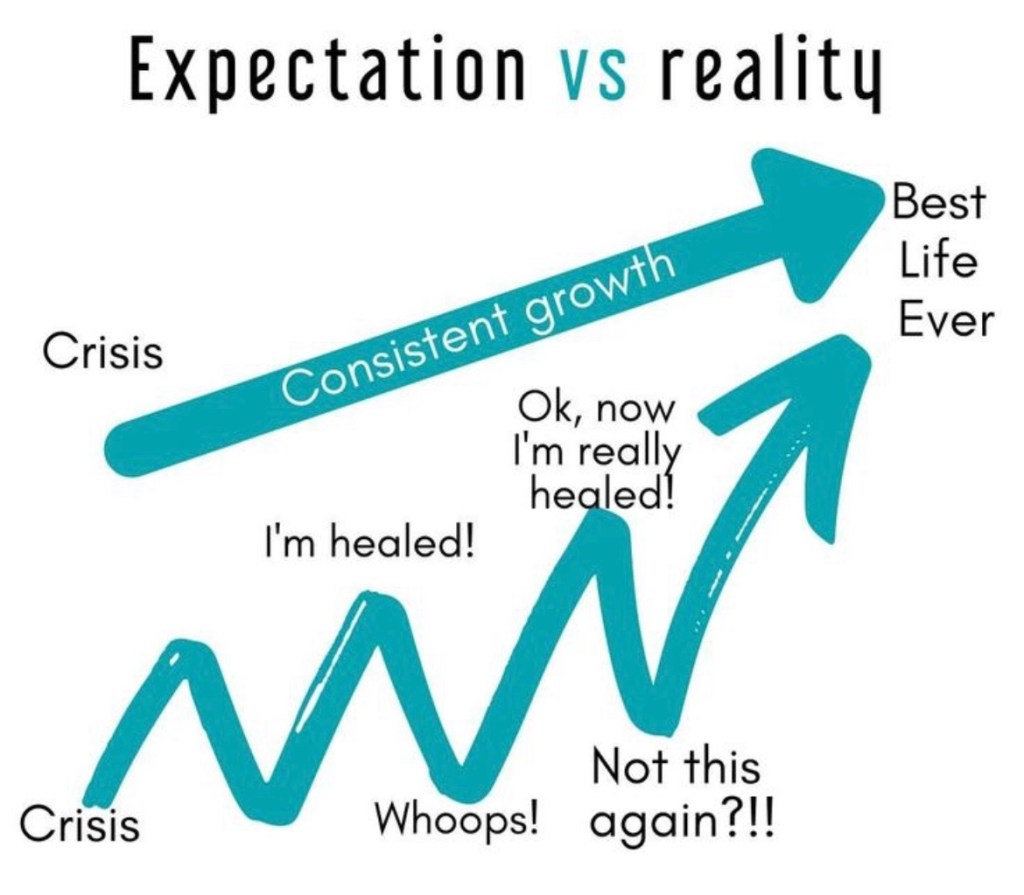
I won’t lie and say that I am not still taken aback by these waves. They still take my breath away and completely stop me in my tracks. I have to actively acknowledge what is happening and do my best to move through it. I cry, I write, a call a trusted friend, I move my body, and I remind myself how far I have come.
Instead of viewing the nonlinear nature of healing as a sign of weakness or failure, we can embrace it as a source of strength and resilience. Embracing the nonlinear journey means:
- Practicing Self-Compassion: Be gentle with yourself on the difficult days. Acknowledge your progress, no matter how small, and offer yourself kindness and understanding.
- Seeking Support: Surround yourself with a supportive network of friends, family, therapists, and fellow survivors who understand the complexities of healing.
- Honoring Your Needs: Listen to your body and mind, and honor your needs in each moment. Whether it’s taking a break, practicing self-care, or seeking professional help, prioritize your well-being.
- Celebrating Victories: Celebrate your victories, no matter how small. Whether it’s setting boundaries, speaking your truth, or reclaiming your joy, every step forward is worth celebrating.
I do not wish trauma of any kind on anyone, but as cliche as it sounds, we cannot have rainbows without rain. I try to view my trauma as an opportunity to grow into a stronger and more resilient woman. I have learned so much about myself, my intuition, and my ability to do things I never thought I could that I may not otherwise have ever fully realized. We don’t have a lot of control over others and the harm they cause us but there is something extraordinarily powerful in knowing the control we have over our reactions and who we become through those experiences.
Healing from trauma is a nonlinear journey, filled with twists and turns, ups and downs. It’s okay to not be okay, and it’s okay to embrace the messiness of your healing process. Remember, healing is not about reaching a destination; it’s about embracing the journey, embracing your strength, and embracing yourself.
With love and solidarity,
M

