
A week ago, I was sitting in a massive conference room at a leadership retreat, surrounded by other leaders in my organization, when I received a text that stopped me in my tracks.
The man who assaulted me had been arrested in another county.
I have intentionally refrained from speaking publicly about the details of my case while it is pending trial. But this, I need to talk about.
Public records show he was arrested and charged with Assault II and Unlawful Imprisonment. Assault II indicates a deadly weapon was used or that the victim was severely beaten. Unlawful Imprisonment means he held her against her will. A situation I am unfortunately familiar with.
He posted bail there, just like he did in my case. But this time, instead of being released into the community, he was transferred to my county for violating the conditions of his release in my case.
He is now sitting in jail on a one million dollar bail. For the first time in two and a half years, I feel fully safe.
When I first read the text, I felt pure rage.
Rage that the system allowed him the opportunity to hurt another woman. Rage that I reported in part to prevent exactly this from happening, and it happened anyway.
I do not know if this was the only time since what happened to me two and a half years ago. Statistically, that seems unlikely. About one in five women experience rape or attempted rape in their lifetime, and somewhere between sixty four and eighty percent of assaults go unreported. I remember the fear that lived in me before I decided to report. The fear that he would retaliate. The fear of not being believed. The fear of what the process would cost me emotionally, professionally, and personally.
Reporting felt terrifying.
Knowing someone else endured what I endured cracks something open inside me. There is grief for her. There is grief for the version of me who once believed that speaking up would guarantee protection for others. There is anger at a system that balances rights and procedures while real women live with the consequences of those decisions.
And then there is something harder to admit.
Validation.
The quiet, uncomfortable thought of “I was right.” The confirmation that my fear was not exaggerated. That my instincts were not dramatic. That the danger was real. I do not feel proud of that validation. It is not something anyone should have to earn this way. But it is there.
I have had incredible people involved in my case. Advocates. Law enforcement. Prosecutors. His release was not the failure of one individual. Still, I am angry at a system that allowed risk to outweigh safety.
At the same time, there is immense relief. Relief that he is in jail. Relief that I do not scan every unfamiliar male face wondering if it is him. Relief that my nervous system may finally exhale after living in survival mode for two and a half years.
I will likely always be more cautious than I used to be. Trauma rewires you. It changes the way you move through the world. But for the first time in a long time, I do not feel hunted.
I think about her often.
I want to tell her she did nothing to deserve what happened. That she is not alone. That none of this is her fault. I want to tell her that the confusion, the shock, the anger, the numbness, and even the moments of doubt are all normal responses to something profoundly abnormal.
Despite all of this, I do not regret reporting.
That does not mean reporting has been easy. It has been exhausting. It has been invasive. It has required me to retell the worst night of my life to strangers in fluorescent lit rooms. It has meant waiting and uncertainty and learning how slowly the justice system moves.
There have been moments of second guessing. Moments where I wondered if staying quiet would have been simpler. Moments where I questioned whether I could handle another court date, another delay, another reminder.
But I do not regret using my voice.
I do not regret choosing to document what happened to me.
I do not regret creating a record that says, clearly and officially, this happened.
Reporting did not prevent every future harm. I wish it had. That reality is heavy. But reporting was still an act of reclaiming power. It was me refusing to carry his secrecy. It was me saying that what he did does not get to live only in my body and my memory.
For many survivors, the emotions are layered and contradictory. There can be guilt for not reporting sooner, even when sooner did not feel safe. There can be guilt for reporting at all, especially if others question the decision. There can be fear of retaliation, fear of being defined by the case, fear of not being believed. There can be exhaustion from explaining yourself. There can be anger at the system and at the person who caused this. There can be grief for the life you had before.
And sometimes, there can be strength you did not know you had.
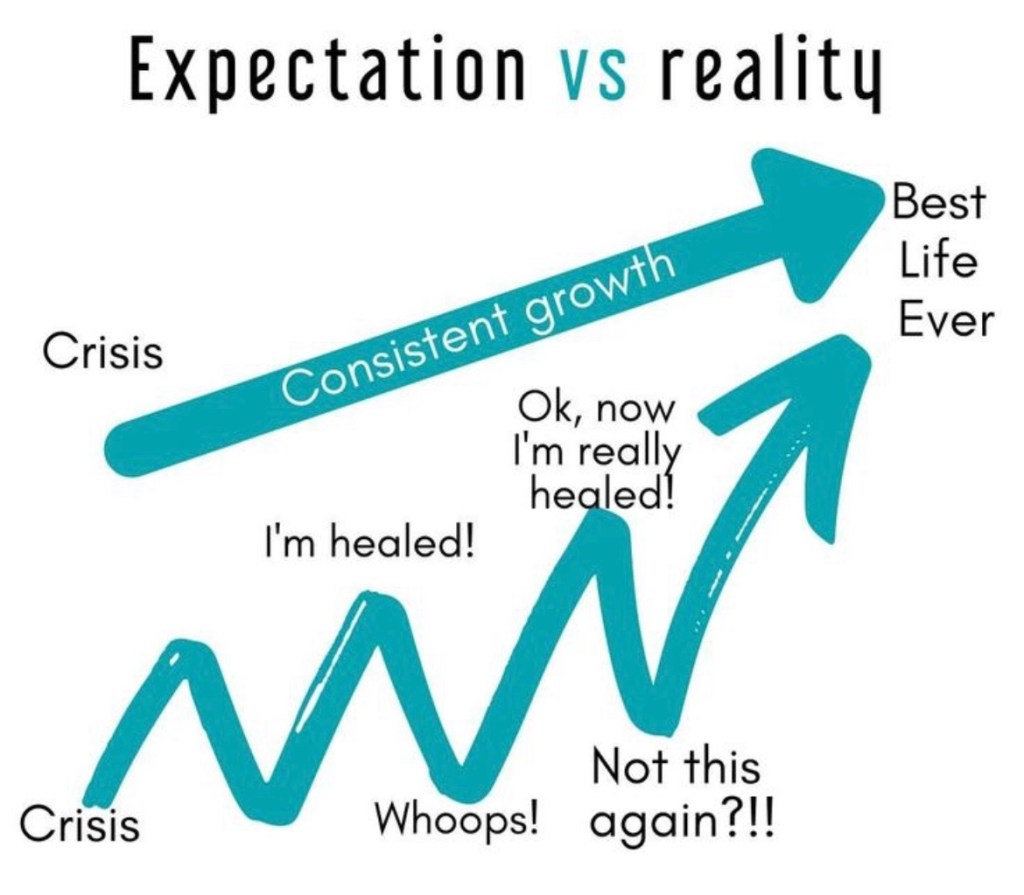
When I go back and read my earlier blog posts, I can see it. I can see the woman who was surviving. I can see the fear, the questioning, the exhaustion. But I can also see the evolution.
This experience has changed me. There are ways it has hardened me. There are ways it has made me more cautious, more guarded, more aware of risk than I ever wanted to be. I would never choose the trauma. I would never call it a gift.
And yet, I cannot ignore the growth.
I speak up now in ways I never used to. Not just about this case, but about everything. I no longer tolerate mistreatment, dismissal, or disrespect in any area of my life. I do not shrink to make other people comfortable. I do not swallow my instincts. If something feels wrong, I say so.
There is a clarity that comes from having your safety violated. You understand, in your bones, what is not negotiable.
I advocate differently. I lead differently. I move through the world differently. I trust myself more. I know that if I can survive this, I can survive hard conversations, uncomfortable boundaries, and the risk that comes with using my voice.
That strength did not appear overnight. It was built in courtrooms and therapy sessions and sleepless nights. It was built every time I chose not to minimize what happened. It was built every time I told the truth, even when my voice shook.
Trauma changes you. That is unavoidable. Some of those changes feel unfair and heavy. But some of them are powerful.
I am not the same woman I was two and a half years ago. In some ways, I grieve her. In other ways, I am deeply proud of who I have become.
I carry rage. I carry relief. I carry grief for the woman who was hurt after me. I carry validation I never wanted to earn. I carry exhaustion from a system that moves slowly and cautiously while survivors live with urgency.
And I also carry strength.
I did not choose this path. But I have chosen how I walk it.
I chose to report. I chose to speak. I chose to refuse silence.
Not because the system is perfect. Not because reporting guarantees protection. Not because it has been easy.
But because my voice matters.
Because secrecy protects harm.
Because even when justice feels incomplete, truth still has power.
If you are a survivor reading this, whether you reported or did not, whether you are loud about it or silent, whether you are angry or numb or somewhere in between, there is no wrong way to survive.
You are allowed to be changed by what happened to you.
You are allowed to grow in ways that surprise you.
You are allowed to become stronger and softer, more cautious and more courageous, all at the same time.
I am still healing. I am still angry. I am still hopeful.
And I am not done speaking.
M
 Shattering the Silence